WAYFAIR
Transforming Supplier Payments and Logistics at Wayfair
December 2021 - Present
Summary
-
Role
As Product Design Lead at Wayfair, I drove design and research efforts for supplier payments and ocean logistics, managing three teams and fostering a user-centered culture.
-
Challenges
Suppliers faced inefficiencies like fragmented data, slow reconciliation, and high support reliance, eroding trust and increasing costs.
-
Solution
Through supplier research, internal analysis, and cross-functional collaboration, my team delivered solutions including centralized financial data, automated reporting, invoice simplification, and streamlined disputes.
-
Results
Results included a 40-second triage time per ticket (down from 2:40), +30 NPS improvement, and enhanced support efficiency.
Context
As the Product Design Lead at Wayfair, I oversee design and research efforts for three key teams, driving strategic initiatives across critical areas:
Supplier Payments: Optimizing how Wayfair suppliers manage and reconcile payments.
CastleGate Forwarding: Enhancing the supplier experience for Wayfair’s ocean logistics services and streamlining internal tools for better shipment support.
In this role, I lead and manage three distinct design teams, ensuring alignment on vision, strategy, and execution. Beyond project delivery, I prioritize people management by coaching and mentoring designers at various experience levels, fostering a culture of growth, collaboration, and excellence within the design organization.
The Problem
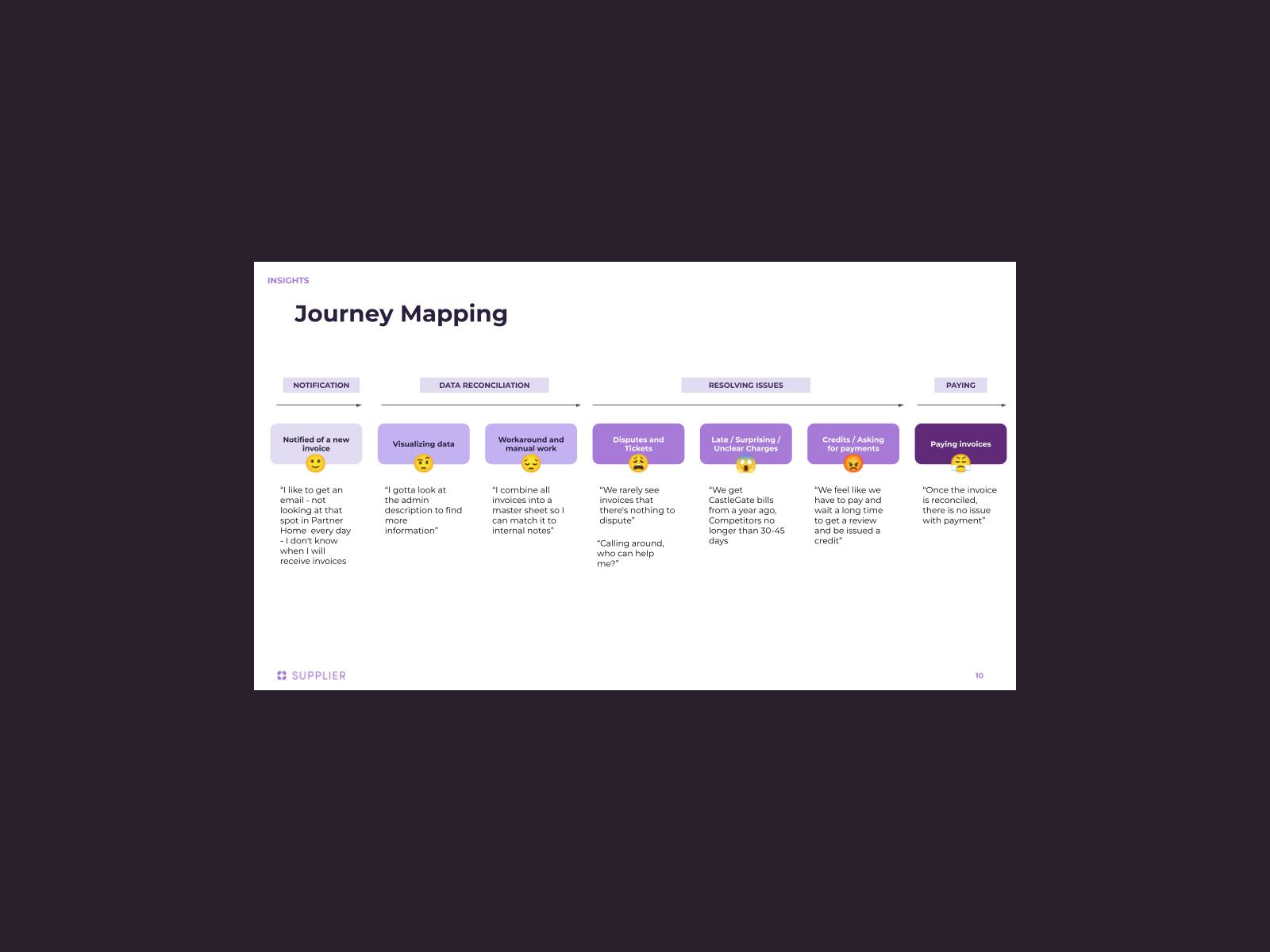
When I joined Wayfair, suppliers faced significant challenges managing their accounts payable and receivable on Partner Home, Wayfair’s supplier portal. These inefficiencies caused suppliers to increase their prices to compensate for additional labor, eroding trust in Wayfair as a business partner. Key issues included:
Time-Intensive Reconciliation
A single supplier task, such as triaging defective item reports (deductions), took an average of 2 minutes and 40 seconds per ticket.
Data Discrepancies
Fragmented data and inconsistent terminology across teams created a confusing and inefficient supplier experience.
Support Overload
Suppliers frequently relied on support teams due to unclear processes, resulting in higher costs and frustration. One supplier shared,
“For other websites, I have one person working for it. For Wayfair, I need to hire three or four people just to manage Partner Home.”
Research and Insights
To address these issues, I collaborated closely with product and engineering teams to identify root causes.
Extensive Supplier Research
Add your pricing strategy. Be sure to include important details like value, length of service, and why it’s unique.
Internal Team Analysis
Add your pricing strategy. Be sure to include important details like value, length of service, and why it’s unique.
We discovered a vicious cycle of bad data:
Poor data quality led to supplier distrust.
Suppliers disputed invoices, creating a flood of support tickets.
Internal teams struggled to process tickets efficiently.
Delays in resolution caused suppliers to withhold payments, impacting Wayfair’s cash flow.
Solutions
Guided by research insights, I led the team to implement targeted, high-impact solutions:
Centralized Data and Simplified Navigation:
Streamlined and centralized financial data within Partner Home, enabling suppliers to make informed decisions quickly.
Automated Payment Reporting:
Transferred the manual payment reporting process from email to Partner Home. This change eliminated delays and confusion caused by email-generated tickets, which accounted for 30-40% of inbound support requests in the Finance queue.
Invoice Simplification:
Introduced the Landed Invoice Summary tool and transformed the design of the digital experience, improving clarity and reducing disputes.
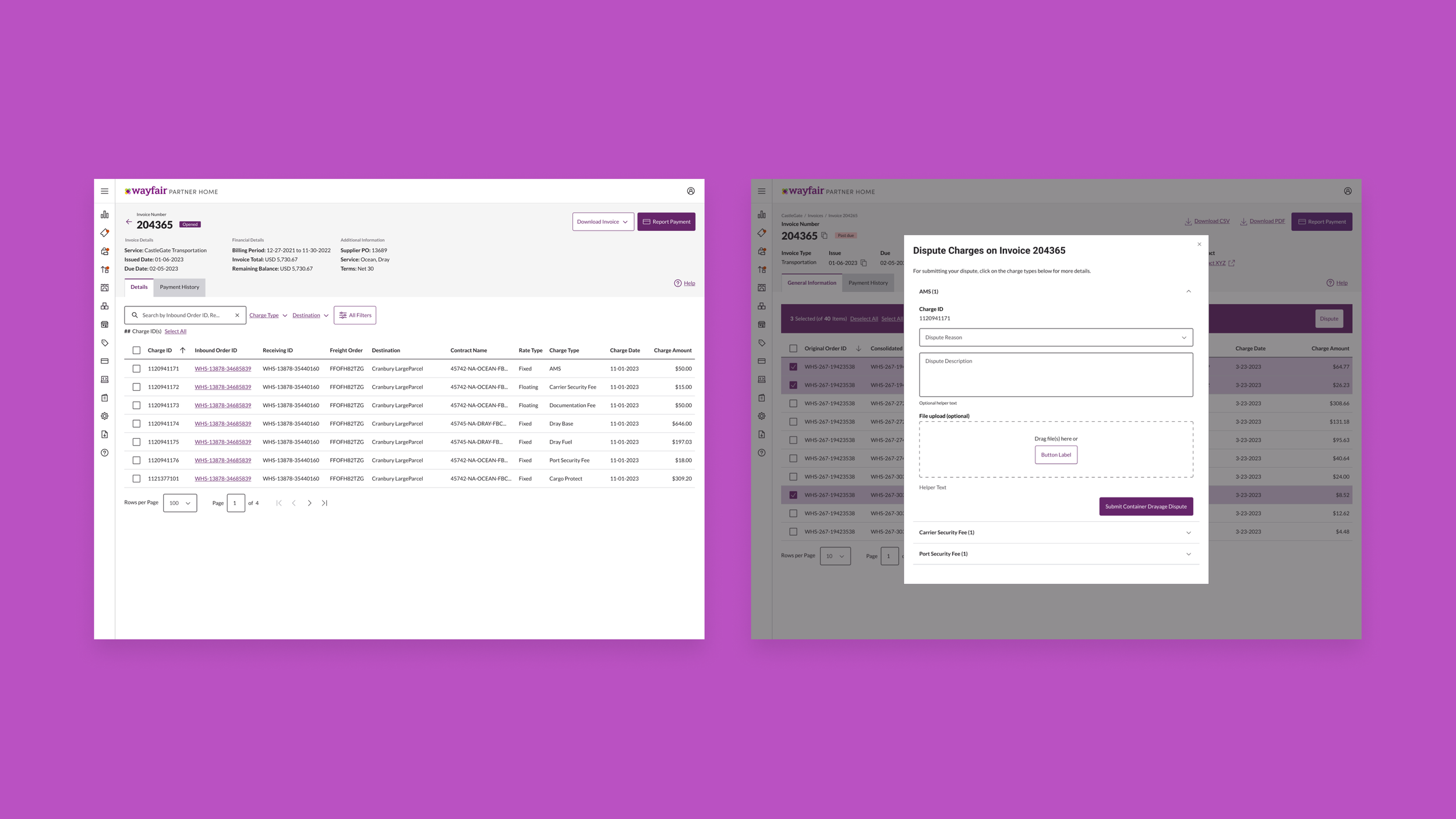
Streamlining the Dispute Path:
Moved the Dispute experience in-app, ensuring suppliers were routed to the correct support agents, reducing ticket volume and improving resolution times.
Results
Our initiatives delivered measurable improvements:
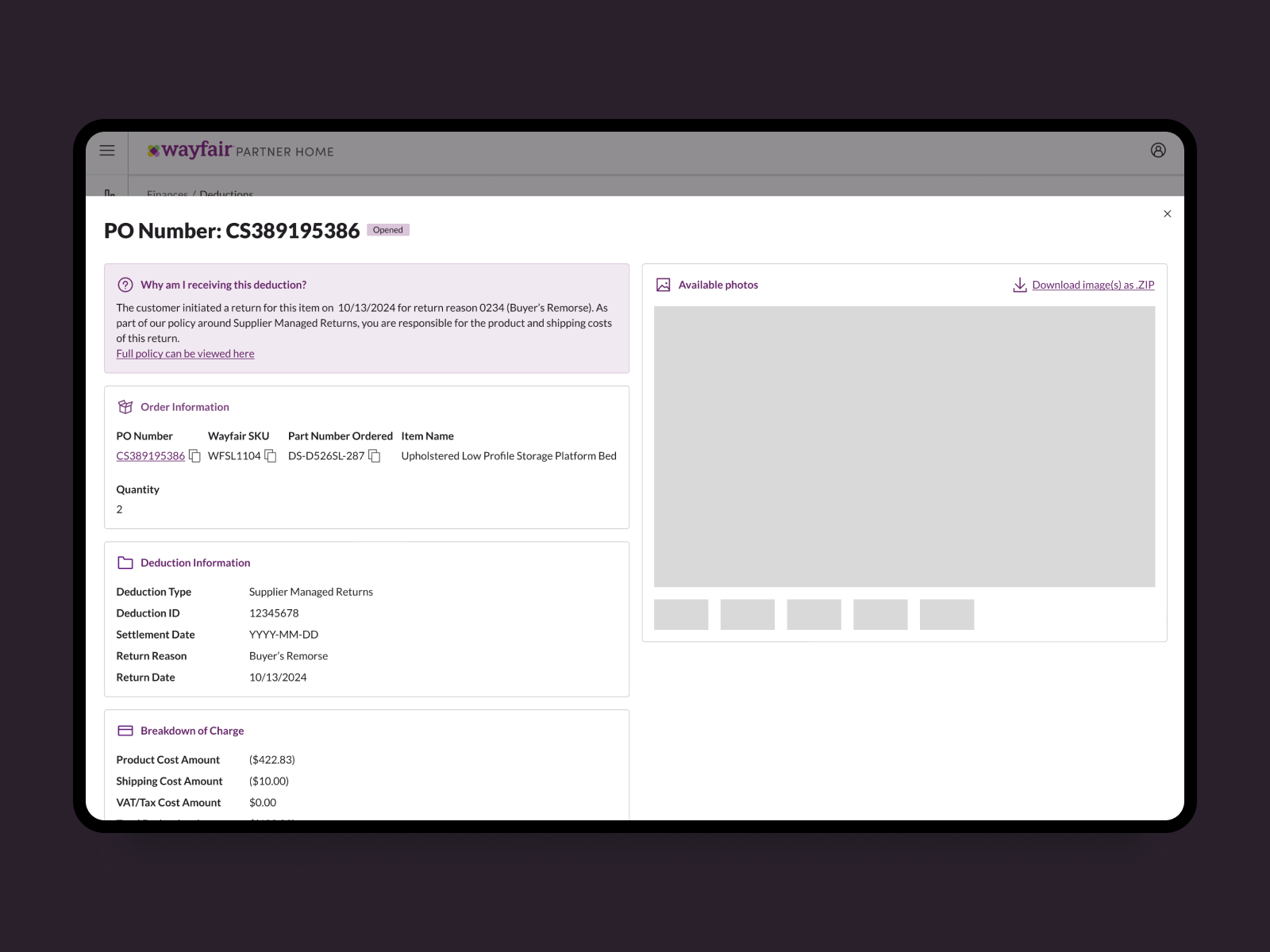
Efficiency Gains: Suppliers reduced their workload and support reliance, saving time and resources. The Deductions initiative reduced triage time from 2 minutes and 40 seconds to just 40 seconds per deduction.
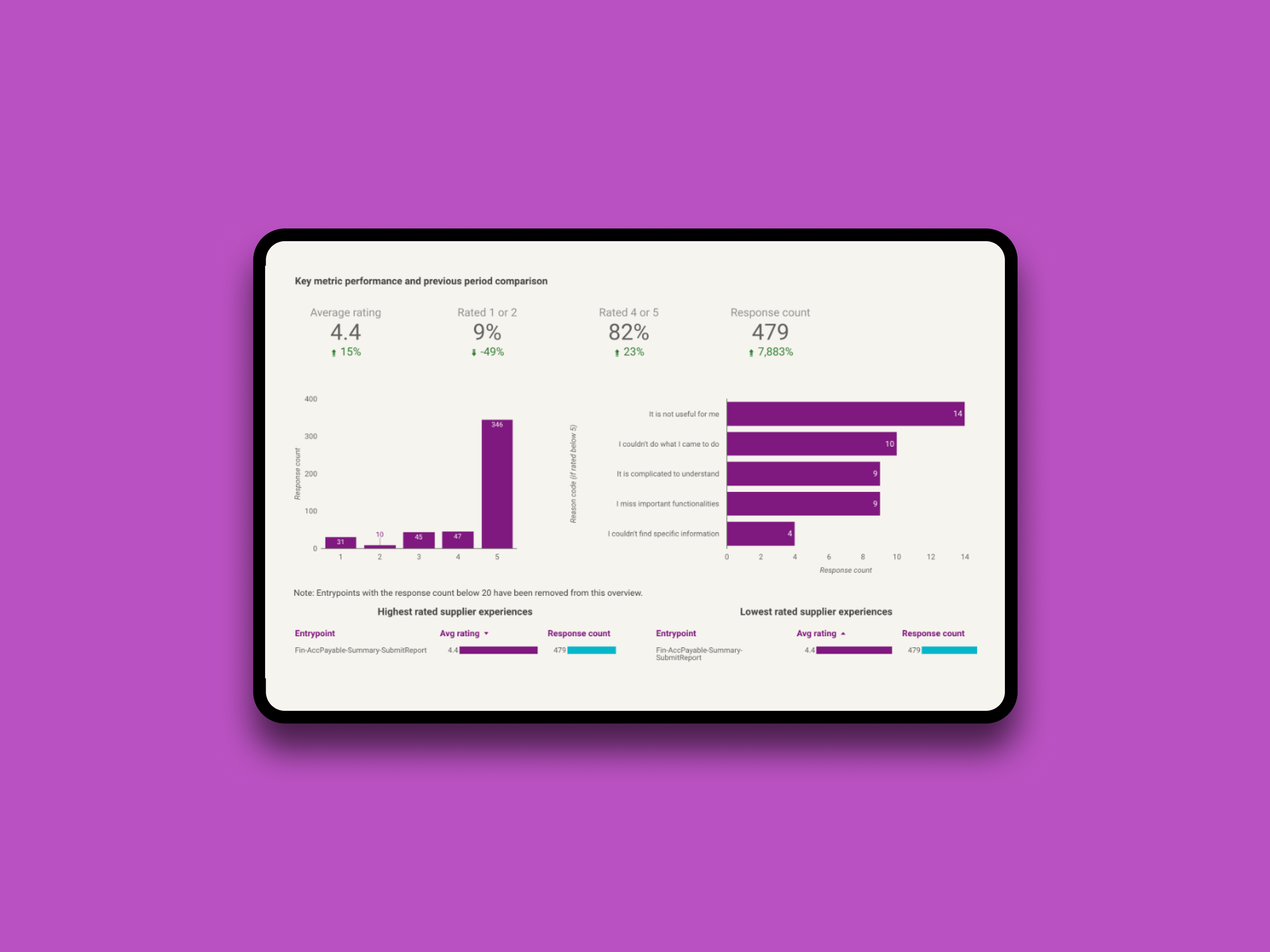
Improved Satisfaction: Supplier Invoicing NPS increased by +30 points in H1 2024 compared to H2 2023.
Streamlined Support: Internal teams benefited from better data quality, enabling faster and more effective resolution of supplier issues.
Reflections & Learnings
This project underscored the importance of cross-functional collaboration and a user-centered approach to solving complex problems. By addressing both supplier and internal challenges, we delivered a more seamless and trustworthy supplier experience, strengthening Wayfair’s partnerships.
As a design leader, I prioritized alignment on the shared goal of improving the supplier journey while championing Continuous Discovery. I introduced a real-time feedback dashboard to monitor supplier sentiment, ensuring we stay agile and responsive to evolving needs.
I presented our findings and best practices at UXPA Boston '22, sharing insights on designing for financial experiences. My talk, Busting the Stress of Bank Credentials: Designing to Minimize Anxiety and Build Trust, highlighted strategies for creating user-centered designs in high-stakes environments. [Insert link and photos of the presentation]
Through this work, I’ve not only contributed to enhancing supplier experiences but also solidified my expertise in leading impactful, research-driven product design initiatives that align business goals with user needs.